


Upper arms can look fuller for several reasons, including the distribution of body fat, muscle size, skin elasticity and normal body proportions. If you exercise regularly but still notice changes around the upper arms, understanding the underlying concern is more useful than assuming there is one treatment that suits everyone. This article focuses on how fat and loose skin differ, not on repeating a general arm-slimming programme.
Considering a professional option? Explore our ONDA Pro body contouring treatment page for consultation and service information.
At a glance
What influences upper-arm appearance?
Soft tissue volume can influence arm fullness.
Reduced elasticity may create a looser or crepey appearance.
Muscle development and arm position also affect the silhouette.
A photograph or self-check cannot diagnose the cause; discuss persistent concerns with a qualified provider.

The appearance of an upper arm is influenced by subcutaneous fat, the amount and shape of muscle, skin elasticity and individual anatomy. Hormonal and age-related changes can also affect fat distribution and skin firmness. Looking at the entire arm rather than one measurement helps clarify whether the concern is fullness, skin movement or muscle definition.
Why Might Your Upper Arms Look Bigger?
The appearance of an upper arm is influenced by subcutaneous fat, the amount and shape of muscle, skin elasticity and individual anatomy. Hormonal and age-related changes can also affect fat distribution and skin firmness. Looking at the entire arm rather than one measurement helps clarify whether the concern is fullness, skin movement or muscle definition.
Fat and loose skin are different considerations
Recommended approach
- Look at the overall pattern of fullness rather than one isolated fold.
- Consider weight-change history and the appearance of skin texture.
- Ask a provider to assess the dominant concern.
Be careful with
- Treating every soft arm contour as “excess fat”.
- Assuming repeated arm exercises selectively remove fat.
- Expecting one procedure to address every type of laxity.
How Is Arm Fat Different From Loose Skin?
| Possible contributor | Typical appearance | What to consider |
|---|---|---|
| Localised fat | Fuller, softer upper-arm outline | Fat distribution varies by genetics and overall body composition; exercise cannot target only one spot. |
| Loose skin | More mobile or crepey-looking skin, sometimes after weight changes | Skin elasticity and history of weight change matter; firmness is distinct from fat volume. |
| Muscle and posture | Arm outline changes with muscle development or positioning | Strength training may affect shape over time but does not guarantee a particular contour. |
These are general distinctions, not a diagnosis based on appearance.
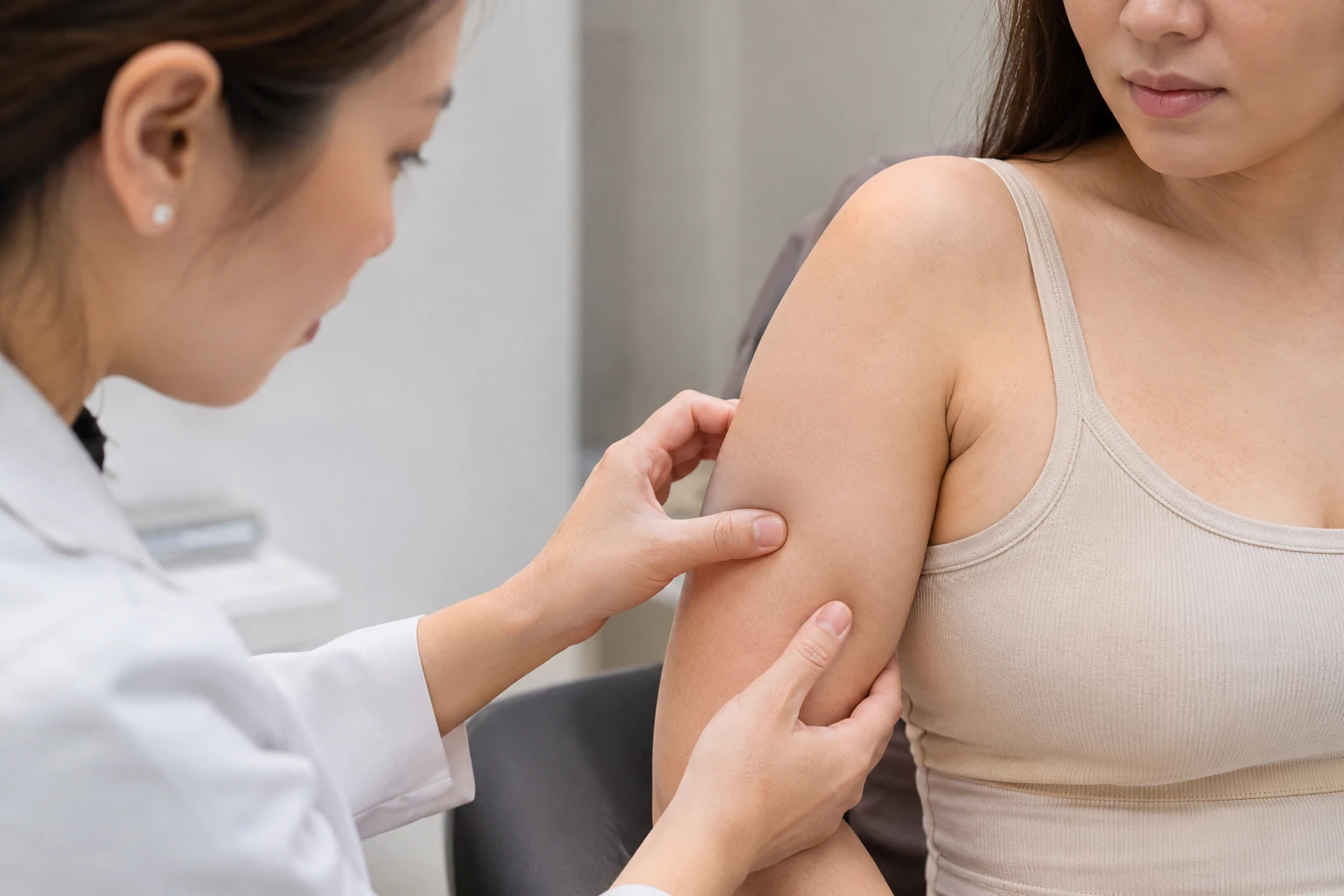
Localised fat usually contributes to a fuller contour, whereas loose skin may appear thinner, crepey or more mobile, particularly when the arm is raised. Some people have both. You cannot reliably diagnose the cause from a photograph alone; a trained professional can assess the tissue, goals and relevant health history.
Why Does Exercise Not Always Change One Specific Area?
Resistance training can build strength and alter muscle shape, while general activity may contribute to overall energy balance. However, there is no dependable method to choose exactly where the body will lose fat through exercise alone. Changes may be gradual, and different individuals respond differently. Exercise remains important for health even when it does not produce the exact contour change you hoped for.
Why Can Skin Look Looser After Weight Changes?
Skin elasticity varies with age, genetics, sun exposure and the extent or pace of weight change. A reduction in underlying volume can make existing skin looseness more noticeable. Depending on its extent, a treatment aimed primarily at localised fat may not address the main concern. This distinction should shape any consultation.
Three paths to consider
Resistance training builds strength; spot fat loss is not assured.
Compare fat, skin laxity and muscle contributions.
Discuss suitability, limitations and risks before any cosmetic procedure.
What Options Are Worth Discussing?
Lifestyle and strength training
Useful for health and muscle development, but spot reduction of upper-arm fat cannot be guaranteed.
Stable weight and time
A stable routine can help assess changes without confusing fluctuations with treatment effects.
Professional assessment
A consultation can distinguish fat volume, skin laxity and other contributors before treatment is discussed.
Non-surgical contouring
Suitability and limitations differ. Read the ONDA Pro Body service overview and ask about arm-specific assessment.
Options range from strength training and maintaining a stable, healthy routine to professional evaluation of non-invasive body-contouring treatments. The right approach depends on whether fullness, laxity or another factor is dominant; no non-surgical procedure should be presented as a guaranteed replacement for surgery or weight management. For an overview of the service rather than a general exercise guide, see ONDA Pro body contouring.
Questions for an arm-contouring consultation
- Is the main issue localised fat, lax skin, muscle shape or a combination?
- Which outcomes are realistically possible for my anatomy?
- What are the risks and recovery considerations?
- How many appointments may be appropriate, if any?
- What is the total cost and follow-up plan?
- How will changes be assessed without misleading comparisons?
Questions to Ask Before Considering Arm Contouring
Ask whether the treatment addresses fat, skin texture or both; whether the upper arm is a suitable area; what outcomes are realistic; what risks and temporary effects to expect; and how a result would be assessed. For broader lifestyle guidance, read our existing guide to slimming your arms.
Fat, Skin and Muscle: Three Different Contributors to Arm Shape
| Factor | Why it affects appearance | Useful question |
|---|---|---|
| Fat distribution | Genetics, age and body composition can change where fat is stored. | Is the concern primarily localised fullness? |
| Skin elasticity | After weight change, skin may not match the underlying arm volume. | Is there laxity or crepey texture? |
| Muscle | Muscle size and tone influence arm silhouette. | What resistance training have I been doing consistently? |
Subcutaneous fat is the soft tissue beneath the skin. Its distribution varies with genetics, overall body composition, hormones and age. Two people with a similar weight may naturally have different upper-arm proportions. This is why copying a friend’s exercise routine does not necessarily produce the same appearance.
Skin laxity refers to skin that has less elasticity or appears to drape over underlying tissue. Changes in collagen and elastin with age, sun exposure and significant weight fluctuations may contribute. Skin appearance can also change with body position, hydration and lighting, so a single mirror observation does not establish a clinical diagnosis.
Muscle and posture influence the outline of the arm. Stronger upper-arm muscles may improve function and alter shape, but muscle training cannot select exactly where body fat is lost. Even highly active people can have naturally soft upper arms.
Sometimes fullness and laxity coexist. Distinguishing them matters because treatments marketed for fat reduction are not identical to approaches intended primarily for skin firmness. If you are exploring aesthetic body contouring, a qualified assessment should identify the concern before suggesting any programme.
Questions to Consider Before Choosing an Arm Contouring Option
Ask whether you are concerned about arm size, loose skin, or both. That distinction is more useful than starting with a treatment name.
Start with the history of the change. Have your upper arms always had this shape, or did you notice a difference after weight loss, pregnancy, menopause or a long break from resistance training? Is the concern the outer silhouette of the arm, the way skin folds when the elbow bends, or difficulty fitting a sleeve? These distinctions lead to more useful questions than searching for a single “best” solution.
Next, consider what you want to achieve. A goal such as improving strength, feeling more comfortable in clothing or understanding available non-surgical options is more actionable than expecting an exact number of centimetres to disappear. Cosmetic outcomes and suitability differ from person to person.
Finally, ask what you are willing to commit to: ongoing strength training, a gradual change in overall body composition, a consultation about treatment options, or simply greater clarity about what is normal. You do not need to choose a procedure to benefit from understanding the issue.
What Resistance Training Can—and Cannot—Do
Resistance exercises such as rows, presses and triceps extensions can improve upper-body strength and build muscle over time. They may influence the arm’s appearance, but they do not selectively burn fat from the area being exercised. This distinction is important for people who complete many repetitions of arm exercises yet notice little change in upper-arm fullness.
A practical programme usually includes progressive resistance, adequate recovery, sufficient nutrition and consistency. If you are new to strength training, start at a comfortable level and consider professional exercise guidance. Changes in body composition are often gradual, and photographs taken under different lighting may exaggerate or hide differences.
Exercise also supports metabolic and cardiovascular health regardless of whether it changes a specific arm measurement. When exploring aesthetic treatments, it is more helpful to see them as a separate decision based on assessment, rather than as a replacement for physical activity or a remedy for an assumed exercise failure.
How to Compare Non-Surgical Options Responsibly
For people considering arm contouring in Singapore, the most useful consultation distinguishes between the intended treatment target and the strength of evidence for a particular method. Ask whether the option is designed for localised fat, skin firmness or both; what limitations are relevant; and what outcomes have been observed for people with a similar concern.
Ask about the number and spacing of sessions, potential adverse effects, expected downtime, total cost and how progress will be assessed. Do not rely on a single dramatic image or a guaranteed measurement. A provider should be able to explain why someone may not be an appropriate candidate.
U Aesthetics has a dedicated ONDA Pro body contouring service page for those exploring professional options. That commercial page explains the treatment offering; this article intentionally addresses the separate question of why arms may look fuller or less firm. You can also read our general arm-slimming guide for a broader lifestyle perspective.
Setting Useful Expectations Before Measuring Progress
If you decide to track your arm shape, use a consistent method and avoid interpreting tiny changes from day to day. Measurements can vary with arm position, tape tension and hydration. A balanced assessment may include comfort, strength and how clothes fit, not just circumference.
Beware of language that promises “spot fat melting” through a single exercise, or suggests all loose skin is caused by excess fat. These claims blur different biological issues. The realistic starting point is to identify the source of the concern and consider the benefits, limitations and risks of each option.
Frequently Asked Questions
Exercise does not allow reliable spot reduction of body fat. It can support overall health and improve strength and muscle definition.
Visual signs can help frame the question, but an in-person assessment is more reliable than self-diagnosis.
No treatment works equally for every type or degree of laxity. Suitability and realistic expectations should be discussed individually.
Yes. A consultation helps identify the concern and whether a specific treatment is appropriate.
Want to discuss whether a treatment is suitable for your concern? Read about ONDA Pro body contouring treatment or contact our team to arrange a personalised consultation.