


Stubborn thigh fat is common, and doing more squats alone does not guarantee that fat will disappear from the thighs. Thigh shape is influenced by overall body fat, genetics, muscle structure, skin firmness and—sometimes—cellulite.
Quick answer: If your goal is slimmer-looking thighs, start with overall lifestyle habits. If a localised pocket remains despite a stable routine, non-surgical body contouring may help improve the shape of a suitable treatment area—but it is not a weight-loss shortcut.
For treatment options, visit our body slimming treatments in Singapore or explore Onda Pro Singapore for localised fat, cellulite and skin-firming concerns.
Why Can Thigh Fat Be So Stubborn?
People store body fat differently. Some naturally carry more fat around the hips and thighs, while others notice it first around the abdomen or upper body. Genetics, hormones, age, weight history and overall body composition all influence where fat is stored and where it tends to reduce first.
This is why two people following the same exercise plan can see very different changes in their legs. One may lose centimetres around the thighs early, while another may see changes elsewhere first.
Thigh slimming should not be confused with general weight loss. A body-contouring treatment is intended to refine a localised area, not to replace nutrition, exercise or medical weight-management care.
If your main concern is stubborn fat in several areas rather than only the thighs, our guide on why fat can remain despite exercise explains the bigger picture.
Inner Thigh vs Outer Thigh: They Are Not Always the Same Problem
Inner Thigh
The inner thigh may involve a soft localised fat pocket, friction between the thighs, mild laxity or a combination of these concerns. The amount of pinchable tissue and proximity to muscle and bone matter when assessing a treatment.
Outer Thigh
Outer-thigh fat can create a wider silhouette around the hips or a “saddlebag” appearance. Shape is also influenced by hip structure and gluteal muscle, so reducing fat does not change the underlying bone structure.
Cellulite can also affect the thighs independently of size. If dimpling is your main concern, read our cellulite guide because the treatment goal is different from simply reducing a fat pocket.
Can Exercise Spot-Reduce Thigh Fat?
Exercises such as squats, lunges, step-ups and cycling can strengthen the muscles of the legs and improve overall fitness. They may make the thighs look firmer as muscle tone improves, especially when combined with overall fat loss.
What they cannot do is command the body to burn fat only from the inner or outer thighs. Fat loss occurs systemically, and the order in which different areas become leaner is largely individual.
| Approach | What It Can Help With | What It Cannot Guarantee |
|---|---|---|
| Strength training | Muscle tone, strength and leg shape | Fat loss from one exact thigh area |
| Cardio / daily activity | Energy expenditure and overall fitness | Targeted inner-thigh fat loss |
| Nutrition / calorie balance | Overall fat loss when appropriate | Where the body loses fat first |
| Body contouring | Localised shape concerns in suitable candidates | Major weight loss or a specific dress size |
What Actually Helps Slim the Thighs?
1. Build a Sustainable Overall Routine
If body fat is the main reason the thighs feel larger, the foundation remains a sustainable combination of nutrition, movement, sleep and resistance training. Extreme diets are difficult to maintain and can reduce muscle as well as fat.
2. Strengthen the Lower Body
Building glute, hamstring and quadriceps strength can improve the visual shape and firmness of the legs even before a dramatic change in body weight occurs.
3. Identify What Is Actually Creating the Shape
A “thick thigh” concern may be caused by fat, muscle, cellulite, loose skin—or simply natural body structure. Treating the wrong issue usually leads to disappointment.
4. Consider Localised Body Contouring When Appropriate
If your weight is relatively stable and a specific thigh area remains resistant to lifestyle changes, a consultation for non-surgical body contouring can help determine whether an energy-based treatment is suitable.
Non-Surgical Thigh Slimming Options in Singapore
There is no single “best” machine for every thigh. Different technologies work through different mechanisms, which is why the treatment should follow the concern—not the other way around.
| Option | Best Matched To | Key Point |
|---|---|---|
| Onda Pro Coolwaves® | Suitable localised fat, cellulite and mild skin-firming concerns | Uses microwave-based Coolwaves® technology for non-invasive contouring |
| Cryo 360 Fat Freeze | Pinchable localised fat in suitable treatment areas | Uses controlled cooling rather than heat-based energy |
| HIFU Body | Selected contouring and tightening concerns | Uses focused ultrasound energy at targeted depths |
| EmShape | Muscle-toning and body-sculpting goals | Better matched when muscle definition is part of the concern |
Our broader non-surgical slimming treatments guide compares more body-contouring approaches if you are deciding between technologies.
Where Onda Pro May Fit Into a Thigh-Slimming Plan
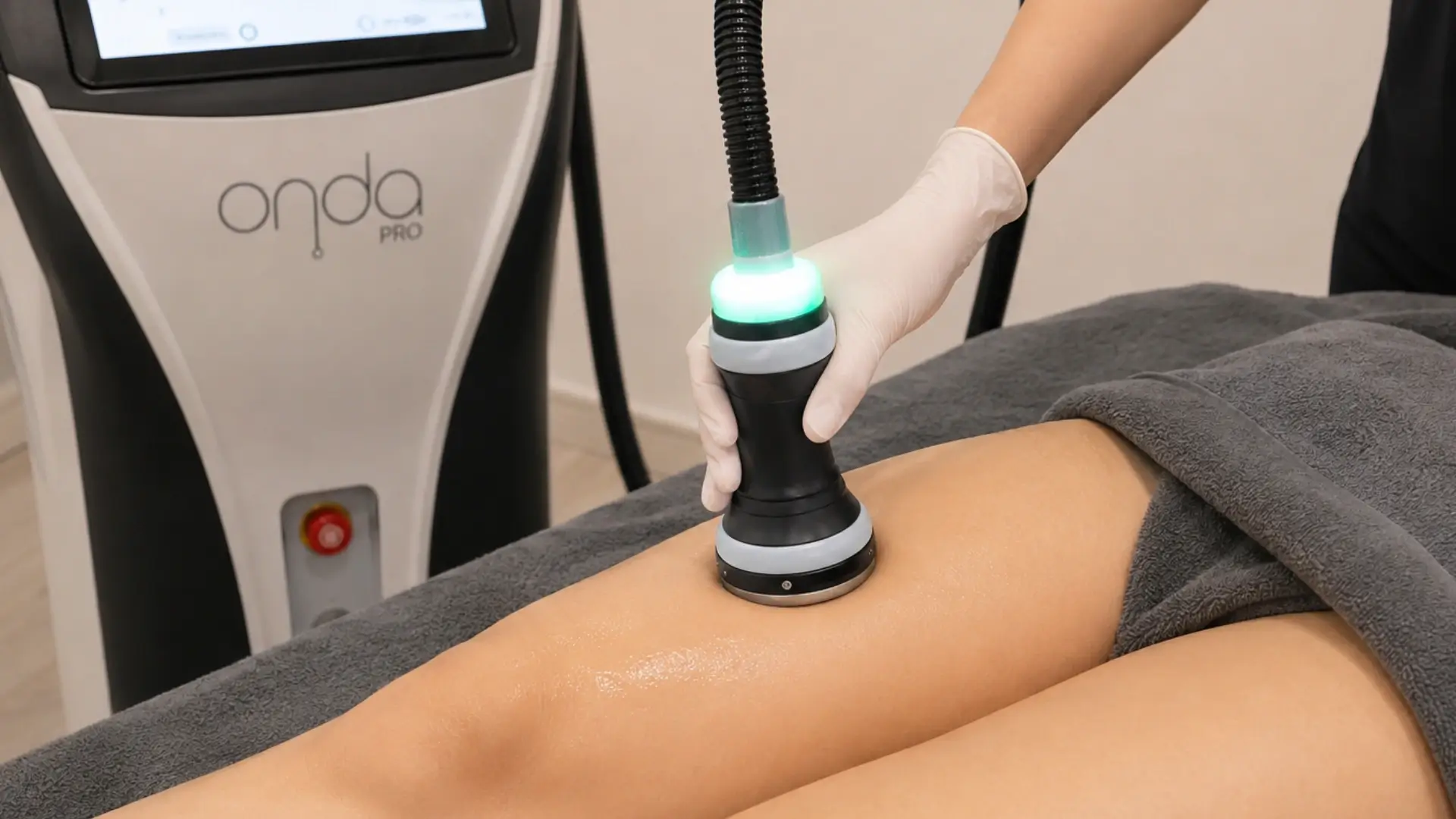
Onda Pro uses DEKA's patented Coolwaves® microwave technology. The manufacturer positions the platform for non-invasive body shaping involving concerns such as localised adiposity, cellulite and skin laxity. Official Coolwaves information also lists thighs among the body areas that can be treated.
This can make Onda Pro relevant when the thigh concern is not simply “I want thinner legs,” but a more specific combination such as a localised fat pocket, uneven texture or mild laxity. The exact handpiece, treatment area and settings should be determined after assessment.
Think of Onda Pro as contouring, not weight loss. The goal is to improve a suitable localised area rather than create a dramatic change on the weighing scale.
For the technology, treatment process and suitability information, see our dedicated Onda Pro Singapore treatment page. You can also read how many Onda Pro sessions may be needed.
Inner and outer thighs often need slightly different contouring considerations depending on where fat is concentrated. LAVAĒ Sculpt's Onda Pro page also lists the inner and outer thighs among the areas that may be assessed for contouring.
Who May Be a Better Candidate for Non-Surgical Thigh Contouring?
- You are close to a relatively stable body weight.
- Your concern is localised to a particular thigh area rather than generalised weight gain.
- You understand that contouring results are gradual and vary by person.
- You are willing to maintain realistic lifestyle habits after treatment.
- You can attend a proper suitability assessment and disclose relevant medical history.
People who are pregnant, have certain medical conditions or implanted devices, or have concerns that require medical diagnosis may not be suitable for some energy-based treatments. Your provider should screen for contraindications before proceeding.
What Results Should You Realistically Expect?
A useful thigh-slimming plan aims for better contour, smoother proportions or improved tissue appearance—not a guaranteed number of centimetres or a guaranteed clothing size.
Progress should be reviewed using consistent photographs, measurements where appropriate and the same body position. Changes can be subtle, and swelling, hydration and normal weight fluctuation can affect short-term measurements.
If your concern is also present in other common areas, you may find our arm slimming guide and belly fat guide useful.
Evidence & Further Reading
For neutral background on non-invasive fat removal, the American Academy of Dermatology explains that these treatments are intended for stubborn localised fat rather than general weight loss. For Onda-specific technology information, refer to DEKA's official Onda Pro materials.
FAQ: Thigh Slimming in Singapore
Exercise can strengthen and shape the thigh muscles, but the body does not reliably burn fat from one chosen area. Overall fat loss depends on energy balance, genetics and individual fat distribution. If a localised thigh fat pocket remains despite stable lifestyle habits, a body-contouring assessment may be considered.
Inner- and outer-thigh concerns can look different because fat distribution, skin quality and muscle shape vary by area. Inner thighs may also involve friction or skin laxity, while outer thighs can create a wider hip or saddlebag contour. Treatment planning should assess the exact area rather than treating the whole thigh the same way.
Depending on the concern, non-surgical options may include energy-based body contouring, fat freezing, HIFU body treatments or muscle-toning technologies. The best option depends on whether the main issue is localised fat, cellulite, skin laxity, muscle tone or a combination.
Onda Pro uses Coolwaves® microwave technology for non-invasive body contouring and is designed for concerns such as localised adiposity, cellulite and skin laxity. Thigh suitability should still be assessed individually before treatment.
There is no universal number. Session count depends on the technology used, treatment area, tissue condition, goal and response. A progress review is more useful than choosing treatment only by a fixed package size.
No. Body contouring targets localised shape concerns and is not a substitute for overall weight management. People seeking significant weight loss should focus on appropriate medical, nutrition and lifestyle guidance.
Results vary by treatment type and individual. Maintaining a stable weight and healthy habits is important because remaining fat cells can still enlarge if body weight increases.
A consultation should assess whether your concern is mainly fat, cellulite, loose skin, muscle tone or a combination, as well as your medical history and expectations. Treatment should then be selected around that assessment.
Not sure whether your thigh concern is fat, cellulite, loose skin or muscle tone? Explore our body treatments or chat with U Aesthetics on WhatsApp for an assessment.