


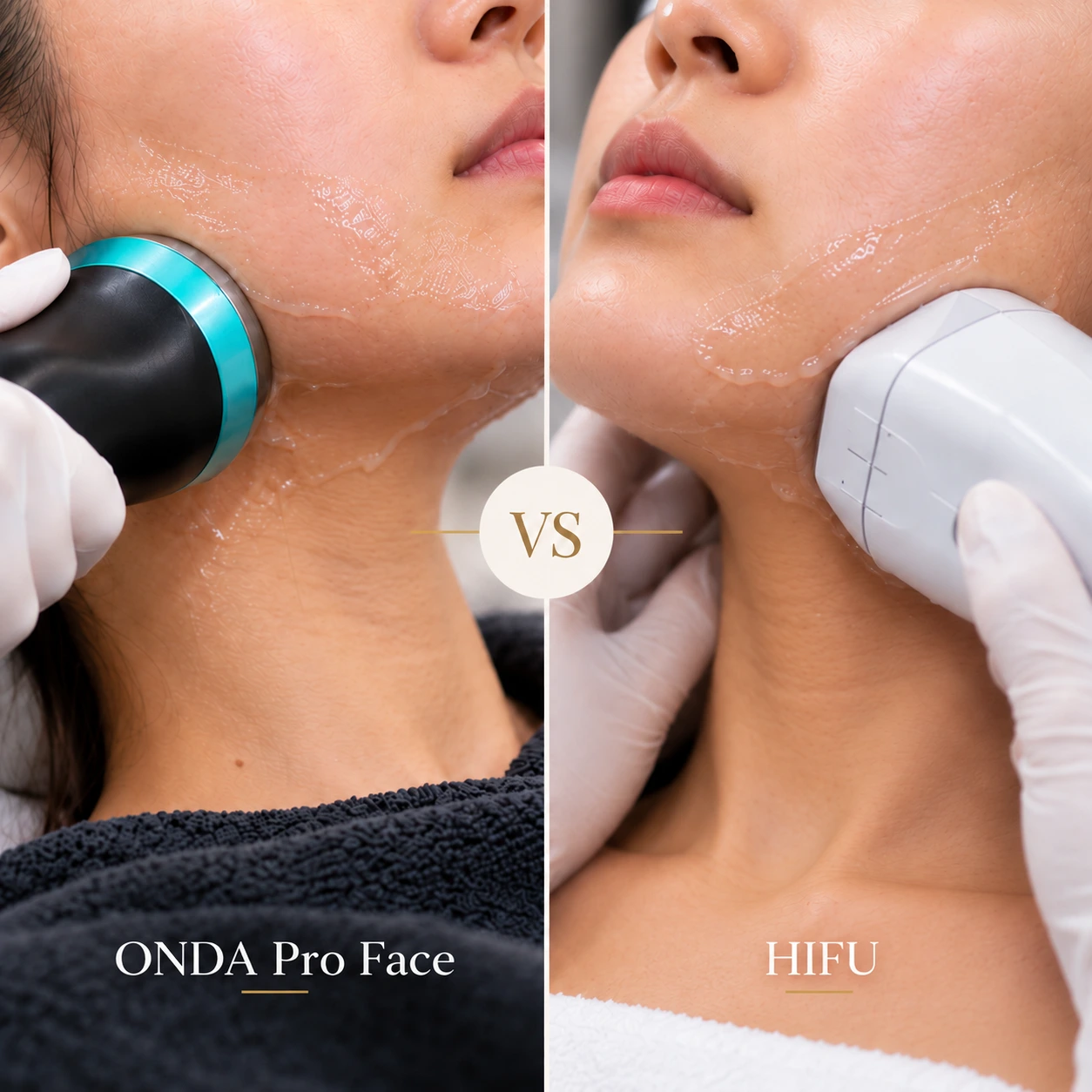
ONDA Pro Face is a non-invasive treatment considered for selected lower-face contouring concerns. If you are planning a session, it is useful to know what you might feel afterwards, what everyday activities may be appropriate and which symptoms deserve professional attention. This guide focuses on recovery and aftercare—not on comparing facial lifting treatments or promising a particular contouring result.
Considering a professional option? Explore our ONDA Pro Face treatment in Singapore page for consultation and service information.
At a glance
ONDA Pro Face aftercare: the essentials
Temporary warmth, redness or tenderness may occur. Responses vary.
Many people may return to normal activities, depending on symptoms and provider instructions.
Seek advice for increasing pain, marked swelling, blistering or unexpected symptoms.
These are general educational points; the treating team’s instructions always take priority.

For many suitable clients, a non-invasive facial session does not require a prolonged recovery period. However, “minimal downtime” does not mean that every person experiences exactly the same skin response. Temporary warmth, redness, sensitivity or tenderness may occur. Your provider should explain the expected response for your treatment settings and skin condition before you proceed.
Is There Downtime After ONDA Pro Face?
For many suitable clients, a non-invasive facial session does not require a prolonged recovery period. However, “minimal downtime” does not mean that every person experiences exactly the same skin response. Temporary warmth, redness, sensitivity or tenderness may occur. Your provider should explain the expected response for your treatment settings and skin condition before you proceed.
What Might You Notice in the First Few Hours?
Warmth or mild redness
Some people notice temporary warmth or mild redness. Ask the treating team what response is expected for your session.
Tenderness or sensitivity
The area may feel slightly sensitive. Avoid pressing or massaging it unless your provider recommends otherwise.
Little visible change
Not everyone sees obvious redness. The appearance of the skin immediately afterwards is not a measure of contouring results.
Unexpected or worsening symptoms
Increasing pain, swelling, discolouration or blistering should be assessed promptly rather than assumed normal.
Immediately after the session, the treated area may feel warm or slightly sensitive. Some people notice mild redness or temporary tenderness. These effects should be assessed in context by the treating team; do not assume that unusual or worsening symptoms are normal. Ask your therapist what was observed during your session and what changes you should monitor at home.
Practical Aftercare for the Treated Area
Follow the personalised instructions given at your appointment. In general, keep skincare simple and gentle if the skin feels sensitive, avoid rubbing or aggressively massaging the treated area unless instructed, and use appropriate sun protection when outdoors. Ask before combining the session with exfoliating treatments, strong active skincare products, intense heat exposure or another facial procedure. Advice may differ based on sensitivity and the actual treatment performed.
Can You Return to Work, Exercise or Makeup?
| Activity | Practical consideration |
|---|---|
| Office work | Routine activities may be possible, subject to how you feel and the advice given at your session. |
| Makeup and cleansing | Confirm when you can resume cleansing and makeup, especially if your skin feels irritated. |
| Gym and vigorous exercise | Ask about returning to exercise if heat, tenderness or visible irritation is present. |
| Other facial treatments | Check before combining strong exfoliation, facial massage, heat-based services or another procedure. |
Individual instructions from the provider take priority.
Many people can resume ordinary activities after a non-invasive facial contouring appointment, but the most appropriate timing for exercise, makeup and additional treatments depends on how the skin responds. If there is visible irritation, heat or tenderness, speak to your provider before restarting activities that may aggravate it. Do not use the absence of visible redness as the only sign that your skin has fully settled.
When Should You Contact the Treatment Provider?
Contact the treating provider promptly if you experience unexpected pain, increasing swelling, blistering, skin discolouration, persistent numbness or symptoms that are worsening instead of settling. Seek urgent medical attention for severe symptoms. A written aftercare plan and an accessible contact number are important parts of a responsible treatment experience.
Questions Worth Asking Before Your Appointment
Ask which facial areas are suitable for treatment, how your skin and facial anatomy will be assessed, what sensations may occur, what aftercare applies to you, and whether another approach is more appropriate for skin laxity rather than localised fullness. You can review the ONDA Pro Face treatment page for service information, then arrange a consultation to discuss individual suitability.
Simple first-day checklist
- Keep the aftercare instructions from your treating team accessible.
- Avoid rubbing, strong facial massage or unfamiliar skincare unless approved.
- Check when you can resume exercise, makeup and heat exposure.
- Observe any temporary skin sensations without assuming they indicate final results.
- Contact the provider if symptoms are unusual or worsening.
- Plan any follow-up based on assessment, not an assumed fixed schedule.
An ONDA Pro Face Aftercare Checklist for the First Day
Your provider’s written instructions should always take priority. The checklist below is a set of sensible questions and gentle-care considerations, not a universal post-treatment protocol. The appropriate advice depends on the area treated, energy settings, skin sensitivity and any other procedures performed on the same day.
- Before leaving: ask what sensations are expected and who to contact if they persist or intensify.
- At home: avoid pressing, massaging or repeatedly checking the jawline if it feels tender.
- For cleansing: confirm whether you can wash your face that evening; use a mild, non-scrubbing cleanser if permitted.
- For moisturising: ask whether your usual fragrance-free moisturiser is suitable, especially if the skin feels warm.
- For outdoor exposure: take sensible sun-protection precautions, including shade and suitable sunscreen when the skin can tolerate it.
- For the next appointment: keep a record of unexpected reactions so your provider can assess them before additional sessions.
One common mistake is treating “non-invasive” as permission to combine many procedures. Strong peels, facial exfoliation, heat-based services and vigorous massage may not be appropriate immediately after a session. Tell the team about your existing skincare routine, particularly retinoids, acids, acne treatments and any prescription products. Do not stop prescribed medication solely because of an online article; ask the prescribing clinician and treatment provider for individual advice.
A practical aftercare timeline
This is a general guide, not a promise about personal recovery time.
-
1
Immediately after
Ask the treating team about expected sensations and what to watch for.
-
2
Later that day
Use gentle care. Avoid adding unapproved treatments or products to the area.
-
3
Following days
Check whether redness or tenderness is settling. Report persistent or worsening symptoms.
-
4
At follow-up
Discuss the treatment response and realistic next steps with your provider.
What Does a Sensible Recovery Timeline Look Like?
| When | What to consider |
|---|---|
| Immediately after | Have the treated area checked; understand expected sensations and contact instructions. |
| Later the same day | Prioritise comfort and gentle care. Avoid judging the result from temporary warmth or swelling. |
| Over following days | Watch for symptoms that persist or worsen; contact the provider with concerns. |
| Follow-up visit | Review suitability and realistic goals with the provider, rather than assuming a fixed session count. |
Immediately after the appointment: the provider should assess the treated area and discuss anything they observed. Some people experience warmth, temporary redness or mild tenderness. Others notice little externally. Neither experience, on its own, establishes whether a treatment will achieve a specific cosmetic result.
Later that day: pay attention to comfort rather than checking the mirror repeatedly for a sharper jawline. Facial contour changes are not something that can be reliably judged from transient warmth, swelling or lighting differences on the same day. Follow the personalised advice on cleansing, makeup and exercise.
Over the following days: symptoms should not be assumed harmless simply because the treatment is marketed as having little downtime. Contact the provider if any response concerns you or does not follow the course they described. If severe pain, significant swelling or other serious symptoms develop, obtain urgent medical assessment.
At follow-up: discuss whether the original concern was under-chin fullness, skin laxity or facial anatomy. These are not interchangeable. A useful follow-up asks what was observed clinically, whether another session is warranted and what limitations apply. It is more informative than a promise of an exact number of sessions or a guaranteed change in facial shape.
Planning work, exercise and social activities
Recommended approach
- Ask the provider if there are any activity restrictions for your session.
- Keep skincare gentle if the area is sensitive.
- Allow flexibility if you have an important event.
Be careful with
- Assuming “minimal downtime” means no chance of side effects.
- Strong massage, hot treatments or exfoliation without approval.
- Judging the final contour immediately after a session.
Planning an Appointment Around Work, Events and Travel
For someone working in Singapore, the practical question is often whether to schedule a session during lunch, after work or before a weekend. Even when downtime is expected to be limited, it is sensible to avoid booking immediately before an important event if you have not had the procedure before. Individual skin responses cannot be guaranteed, and arranging some flexibility removes unnecessary pressure.
If you commute outdoors after the appointment, ask what sun protection is appropriate for the treated area. If you are travelling, discuss your schedule with the clinic in advance rather than assuming that heat, swimming, intense activity or other facial services will be fine immediately afterwards.
If you have a sensitive-skin history, a recent facial procedure, active irritation or a medical condition relevant to treatment suitability, mention it before booking. A clear consultation should cover these factors before any treatment is undertaken. You can find an overview of the service on our ONDA Pro Face treatment page; that page is the primary destination for commercial treatment information, while this article focuses specifically on aftercare.
Common Misunderstandings About Minimal Downtime
Minimal downtime describes recovery expectations, not a guarantee of zero side effects or an immediate visible change.
“No downtime” means there are no side effects. Not necessarily. Minimal downtime usually describes the ability to resume routine activities, not an assurance of zero redness, warmth or discomfort. Request a realistic explanation of expected responses.
“If I feel nothing, the treatment did not work.” The intensity of a sensation is not a reliable standalone measure of effectiveness. Discuss expected outcomes and review intervals with your provider instead of trying to interpret discomfort.
“I can use every skincare active straight away.” Strong skincare products can irritate already sensitive skin. Ask which products to postpone or continue, particularly if you routinely use exfoliating acids or prescription acne treatments.
“A treatment for a double chin is automatically the best approach to loose skin.” Under-chin fullness, skin laxity and structural concerns have different causes. An appropriate plan begins with assessment, not a one-size-fits-all facial lifting claim.
Frequently Asked Questions
Many clients can return to routine activities, but recovery advice depends on the individual treatment and skin response. Confirm this with your provider.
Ask the treating team about cleansing on the day of treatment. Gentle skincare is generally preferable if the area feels sensitive.
Temporary redness or warmth may occur. Increasing pain, swelling or unusual skin changes should be assessed by the provider.
The recommended interval depends on the treatment performed, your skin response and the other procedure. Get individual guidance rather than following a fixed schedule.
Want to discuss whether a treatment is suitable for your concern? Read about ONDA Pro Face treatment in Singapore or contact our team to arrange a personalised consultation.


