



If your skin flushes easily, stings when you try new products or becomes irritated after exfoliation, choosing a facial can feel risky. Searching for a facial for sensitive skin in Singapore is not really about finding the “weakest” treatment — it is about understanding why your skin is reactive right now and adjusting the treatment accordingly.
Hydrafacial® may be suitable for some people with sensitive skin because the treatment can be customised, but “sensitive skin” covers many different conditions. If your skin is actively inflamed, broken, sunburnt, experiencing an eczema or dermatitis flare, or recovering from another procedure, treatment may need to be delayed or modified. A skin assessment matters more than the treatment name.
For the treatment steps and consultation details, visit our Hydrafacial® Singapore page.

What Does “Sensitive Skin” Actually Mean?
People use “sensitive” to describe many different experiences: easy redness, burning, tightness, product reactions, acne irritation, a weakened skin barrier or a diagnosed skin condition. These are not interchangeable, and they do not all respond to facials in the same way.
Naturally Reactive Skin
Skin may flush or react easily even when there is no obvious damage.
Over-Exfoliated Skin
Too many acids, scrubs or retinoids can temporarily weaken tolerance.
Active Skin Condition
Eczema, dermatitis, rosacea or another condition may require a different approach and professional guidance.
Post-Procedure Sensitivity
Recent peels, lasers or other treatments can temporarily change what the skin can tolerate.
“Is Hydrafacial® gentle?” — it is “Is my skin in a suitable condition for this treatment today?”
Why Does My Skin Suddenly Become Sensitive?
Skin can suddenly feel more sensitive even if you do not normally have sensitive skin. Common triggers include using too many exfoliating products, increasing retinoid use, trying several new active ingredients at once, recent facial procedures or excessive sun exposure. In these situations, the skin may need time to recover before another treatment is added.
Skin That Is Usually Sensitive
Reactivity tends to be a recurring pattern. Certain products, temperatures, friction or treatments may consistently trigger flushing or discomfort.
Skin That Suddenly Feels Sensitive
Redness, tightness or stinging starts after over-exfoliation, a new skincare product, recent treatment or too much sun exposure.
If your skin has suddenly become reactive, adding more exfoliation just because a facial is described as “gentle” may still be too much. Give the skin time to settle, keep homecare simple and tell your therapist about recent skincare changes or treatments. Persistent redness, burning, swelling or unexplained irritation should be assessed professionally rather than repeatedly trying different facials.
Can Hydrafacial® Be Suitable for Sensitive Skin?
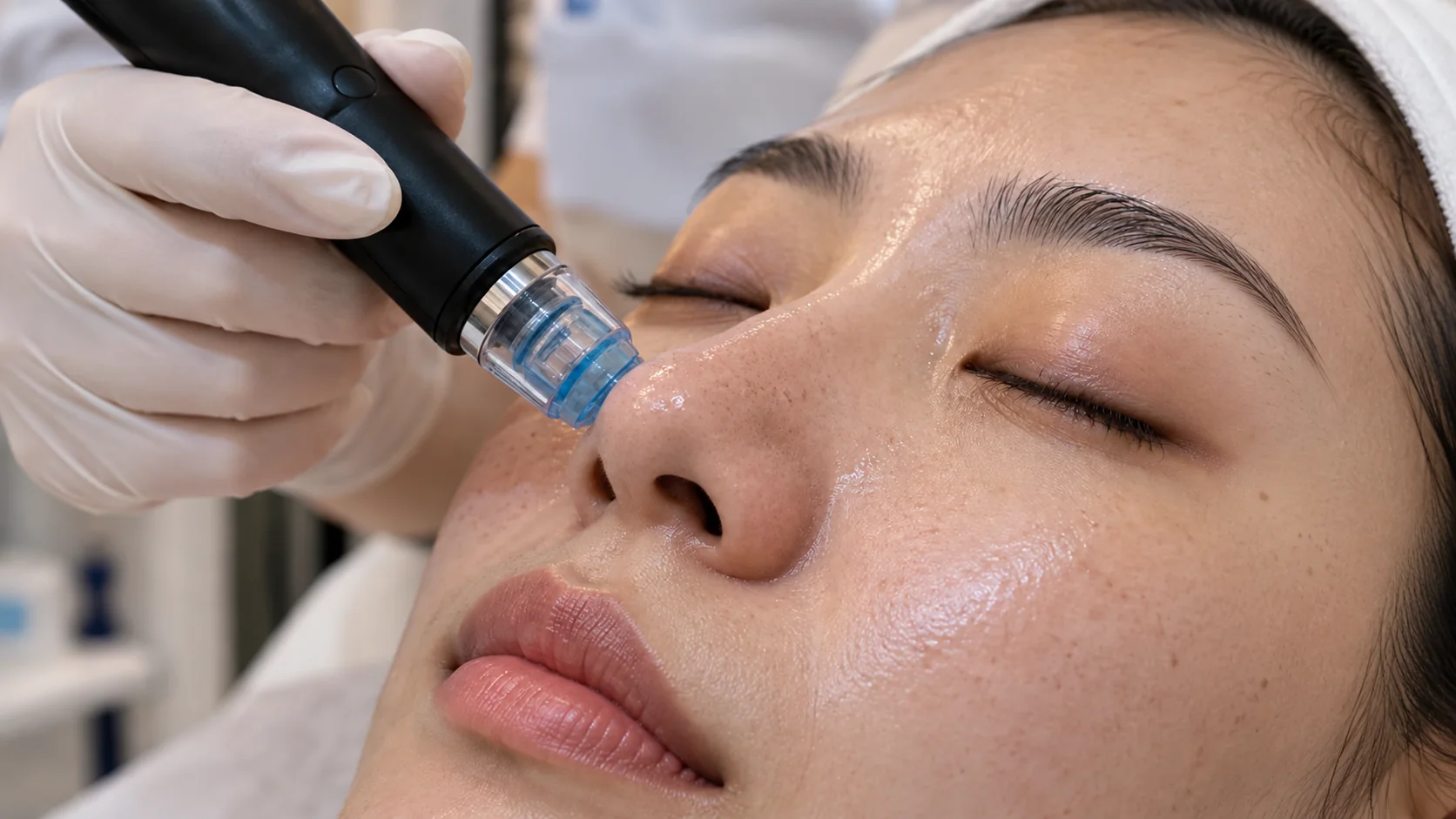
Hydrafacial® uses a structured device-assisted system that combines cleansing, exfoliation, extraction and hydration. The official treatment information also describes the experience as customisable based on skin concerns and goals. That flexibility is useful, but it does not mean every sensitive or irritated skin condition should automatically be treated.
Why It May Be Considered
- Non-invasive treatment format
- Controlled device-assisted treatment
- Hydration is built into the protocol
- Treatment steps can be customised
Why Assessment Still Matters
- Exfoliation may not suit an impaired barrier
- Extraction may irritate inflamed areas
- Recent procedures can increase sensitivity
- Skin conditions may need medical guidance
Official treatment reference: Hydrafacial states that its treatment can be customised with different treatment elements depending on individual goals. View Hydrafacial FAQ →
How Can a Hydrafacial® Be Adjusted for More Reactive Skin?
The principle is simple: sensitive skin should not be treated as a challenge to “push through”. The provider should work within the skin's tolerance and main treatment goal.
Treatment Intensity
Suction and exfoliation approach can be selected according to skin tolerance.
Focus Area
Congested areas may need different attention from dry or reactive areas.
Product Selection
The protocol should consider known sensitivities and current skincare use.
Treatment Timing
A calm skin day is usually more appropriate than treating during an active flare.
When May It Be Better to Delay a Facial?
If the skin is already visibly distressed, the goal should be to understand the cause first. A stronger facial is not automatically the fastest route back to healthy-looking skin.
- Active rash, broken skin or significant irritation
- Sunburn or recent excessive sun exposure
- Active flare of eczema, dermatitis or another known skin condition
- Recent peel, laser or procedure without adequate recovery time
- Unexplained persistent redness, swelling or burning
If sensitivity is severe, persistent, painful or linked to an ongoing skin condition, a doctor or dermatologist can help identify the cause. A facial should support appropriate skin care — not replace diagnosis or treatment of a medical condition.
Hydrafacial® vs Regular Facial for Sensitive Skin
| Factor | Hydrafacial® | Regular Facial |
|---|---|---|
| Method | Structured device-assisted protocol | Usually more manual and product-based |
| Extraction | Device-assisted when included | Often manual when included |
| Hydration | Built into the treatment sequence | Usually delivered with masks, serums or moisturisers |
| Customisation | Protocol elements can be adjusted | Can be highly customised by therapist |
| Best Choice? | Depends on the reason for sensitivity, current skin condition and treatment goal | |
For a deeper comparison, read our Hydrafacial® vs Regular Facial in Singapore guide.
How to Prepare if Your Skin Is Sensitive
- Tell the therapist about known sensitivities, allergies and previous reactions
- Mention retinoids, acids, prescription skincare and recent treatments
- Avoid stacking multiple professional treatments too close together without guidance
- If reactions come and go, showing a photo of a recent flare can help explain your concern
Sensitive-Skin Aftercare After Hydrafacial®
Aftercare should be boring in the best possible way: gentle, consistent and free from unnecessary experimentation.
- Use a gentle cleanser and suitable moisturiser
- Apply broad-spectrum sunscreen daily
- Avoid adding several new actives immediately after treatment
- Monitor redness, stinging or irritation rather than ignoring it
- Contact your provider if you develop an unexpected or persistent reaction
If you are planning Hydrafacial® as part of a routine rather than a one-off session, our Hydrafacial® frequency and aftercare guide explains how treatment intervals can be personalised.
It may be suitable for some sensitive skin when the protocol is adjusted appropriately, but sensitivity has many causes. Current irritation, active skin conditions and recent procedures should be assessed before treatment.
Temporary redness can occur after facial treatments, especially in reactive skin. The degree and duration vary by person, treatment intensity and current skin condition.
Hydrafacial® treatments can be customised, and providers may adjust treatment steps or intensity according to skin goals and tolerance. The appropriate protocol should be decided after assessment.
If your skin is actively inflamed, broken, very irritated or experiencing a flare of a known skin condition, it is safer to get professional advice before proceeding with exfoliation or extraction.
Keep aftercare simple and follow provider instructions. Avoid unnecessary exfoliation or introducing several strong active products immediately after treatment, and use daily sun protection.
Neither is automatically better. Hydrafacial® offers a structured device-assisted protocol, while a regular facial can be highly customised manually. The best choice depends on why your skin is sensitive and what treatment goal you have.
Related Hydrafacial® guides: Hydrafacial® for blackheads & clogged pores, Hydrafacial® for dry & dehydrated skin, and Hydrafacial® vs regular facial.
Not sure whether Hydrafacial® is the right facial for your current skin? Speak with our consultants for a personalised recommendation based on your concerns and skin condition.