


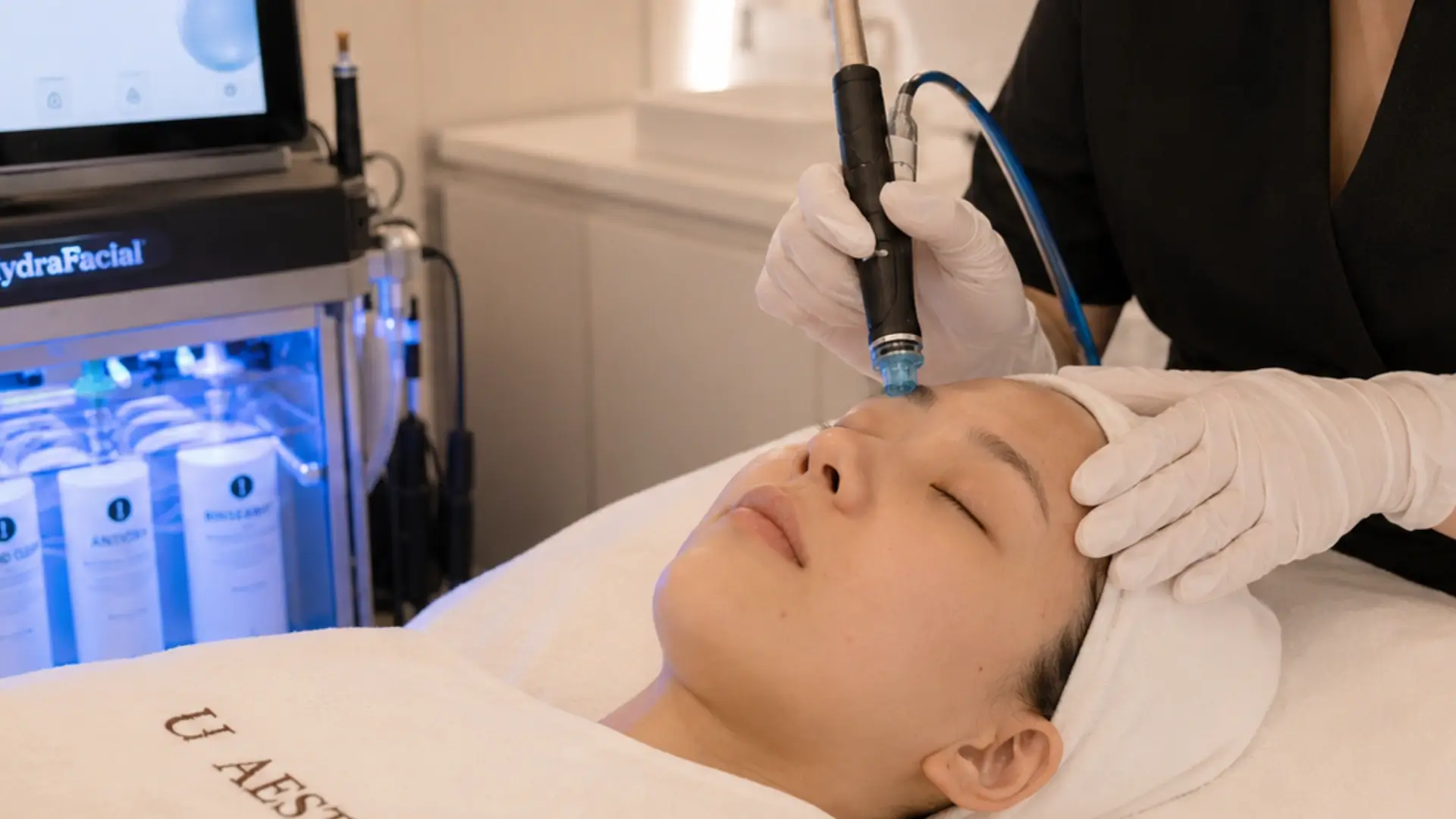
For many people, Hydrafacial is not something that needs to be done every week. The right frequency depends on your skin condition, goals and response to treatment.
Quick answer: Hydrafacial’s official FAQ says many clients schedule treatments about once a month for maintenance, while others may prefer every 2–3 months. More frequent plans can be used in selected cases, but your schedule should be personalised rather than copied from a fixed package.
For treatment details, visit our Hydrafacial Singapore page. If you are still deciding between treatment styles, see Hydrafacial vs regular facial .
How Often Should You Get a Hydrafacial?
There is no compulsory Hydrafacial schedule. The official Hydrafacial FAQ states that many clients book about once a month to maintain hydration and a consistent glow. It also notes that some people choose treatments every 2–3 months, while more frequent sessions may be used for selected goals.
That range is exactly why the answer should not be “everyone needs one every four weeks.” Skin type, sensitivity, congestion, hydration, current skincare, upcoming events and your overall facial plan all matter.
Assess your skin → choose a treatment goal → perform the session → review how your skin responds → set the next interval only if another session is useful.
Hydrafacial Frequency by Skin Goal
| Skin Goal | How Frequency Is Usually Planned | What to Consider |
|---|---|---|
| Occasional glow / refresh | As needed rather than automatically monthly | Useful before social occasions or when skin looks dull or dehydrated |
| Regular maintenance | Often around monthly for people who enjoy consistent upkeep | Review whether your skin actually benefits at that interval |
| Congestion / clogged pores | May begin with a more structured plan, then space out | Active acne, sensitivity and underlying skin conditions should be assessed first |
| Dry or dehydrated-feeling skin | Based on recurrence of dryness and the rest of your skincare routine | Home moisturising and barrier care remain important between sessions |
| Long-term facial routine | Hydrafacial may alternate with other treatments rather than being repeated continuously | Avoid stacking procedures without considering recovery and skin tolerance |
If your main issue is dullness rather than congestion, our dull-skin and brightening guide may help you decide whether Hydrafacial is the most relevant option.
Do You Need a Hydrafacial Every Month?
No. Monthly Hydrafacial is a common maintenance pattern, but it is not a requirement for everyone. A person with stable, low-maintenance skin may prefer occasional sessions, while someone following a targeted plan may be reviewed more regularly.
The more useful question is: what are we trying to maintain? If your goal is simply a refreshed look before an event, you may not need a monthly programme. If your concern is recurring congestion, uneven texture or dehydration, a provider may suggest a structured course and then extend the interval once your skin is more stable.
Frequency should also account for other facials. U Aesthetics offers several facial treatments in Singapore, and repeating multiple exfoliating or energy-based procedures too close together may not be appropriate for every skin type.

How Long Do Hydrafacial Results Last?
Hydrafacial is known for producing a refreshed, smoother and more hydrated appearance soon after treatment. The official brand describes an immediate glow, but the duration of visible results varies between people.
Factors that can affect how long your skin looks fresh include:
- Your starting level of dehydration or congestion
- Oil production and pore tendency
- Sun exposure and daily sunscreen use
- Sleep, stress and lifestyle
- Home skincare consistency
- The type of Hydrafacial and any customised steps or boosters
A maintenance plan is therefore less about “making one result last forever” and more about deciding whether periodic treatment adds value to your overall skincare routine.
Can You Do Hydrafacial Too Often?
Hydrafacial is designed as a gentle, non-invasive treatment and the official brand notes that selected clients may have sessions more frequently than monthly. However, “possible” does not mean “necessary.”
If your skin is becoming persistently red, dry, tight or reactive—or if you are also using prescription acne treatment, strong retinoids, acids, peels, lasers or other procedures—the timing should be reviewed by an appropriate professional.
More sessions are not automatically better. Good skin planning balances treatment frequency with recovery, home care and the actual concern being treated.
Hydrafacial Aftercare: What to Do After Your Session
Most people can return to normal activities quickly, but aftercare still matters—especially if your skin is naturally sensitive or your treatment included customised steps.
Keep It Gentle
Use a simple cleanser and moisturiser if your skin feels sensitive. Avoid introducing several new active products on the same day.
Use Sun Protection
Daily broad-spectrum sunscreen is important after any facial that includes exfoliation and is also part of good long-term skin care in Singapore's high-UV environment.
Hydrate the Skin
Continue an appropriate moisturising routine so the skin barrier remains comfortable between professional treatments.
Follow Your Provider's Advice
If your session included boosters, LED, extractions or other customised steps, follow the specific aftercare instructions given to you.
When Should You Schedule Hydrafacial Before an Event?
Hydrafacial is often selected before weddings, photoshoots, dinners or other events because it is associated with a refreshed appearance and minimal downtime. If you have done the treatment before and know how your skin responds, your provider can help plan the timing around your event.
If it is your first Hydrafacial, avoid experimenting at the very last minute. Give yourself enough time to see how your skin responds, especially if you are sensitive or prone to temporary redness.
How Do You Know When to Book Your Next Hydrafacial?
Instead of booking automatically, review three things:
- Your skin today: Is dullness, dryness or congestion returning?
- Your goal: Are you maintaining, preparing for an event or addressing a specific concern?
- Your overall routine: Are you using other treatments or actives that affect the ideal timing?
If another session is useful, book it based on that assessment. If your skin is doing well, there is no reason to force the same fixed schedule on everyone.
For a direct comparison of treatment styles, read Hydrafacial vs regular facial or Hydrafacial vs CO₂ facial.
Official Reference
The Hydrafacial Company's current FAQ states that treatment frequency depends on individual skin needs and goals. It describes monthly sessions as common maintenance, while also noting that some people choose longer intervals and selected clients may use a more frequent plan.
FAQ: Hydrafacial Frequency & Aftercare
There is no single schedule for everyone. Hydrafacial’s official FAQ notes that many clients book about once a month, while some choose every 2–3 months and selected treatment plans may be more frequent. Your ideal interval should be based on skin type, current concerns, goals and how your skin responds.
Monthly Hydrafacial treatments are a common maintenance pattern according to the official Hydrafacial FAQ. However, monthly treatment is not automatically necessary for every person. If your skin is stable and your goal is occasional maintenance, a longer interval may be appropriate.
Hydrafacial’s official guidance says more frequent sessions may be used for selected goals, but that does not mean every two weeks is the right default. A provider should assess your skin condition, sensitivity and overall routine before recommending a shorter interval.
Skin can look more hydrated, smooth and refreshed soon after treatment, but how long the visible effect lasts varies with skin condition, lifestyle, home care and the treatment performed. Regular maintenance may help support consistency rather than relying on a one-off session.
Follow your provider’s aftercare instructions. If your skin feels sensitive, keep the routine gentle, avoid unnecessary harsh exfoliation or introducing strong new actives immediately, moisturise appropriately and use daily sun protection.
Many people return to normal activities quickly, but skin can respond differently. If you have redness or sensitivity, it may be better to keep the skin clean and simple for the rest of the day and follow the advice given after your treatment.
Hydrafacial is commonly chosen for a refreshed appearance with minimal downtime. If it is your first treatment or you have reactive skin, avoid experimenting immediately before an important event; schedule enough time to see how your skin responds.
Use your skin condition and goals rather than a fixed package alone. If hydration, congestion or dullness is returning, or you are following a planned treatment course, your provider can review whether another session is appropriate.
Want a Hydrafacial schedule based on your actual skin condition instead of a fixed package? Explore Hydrafacial at U Aesthetics or chat with our consultants on WhatsApp .